






In this volume of Number One Journal, recording artist Raveena Aurora emerges as something other than human.
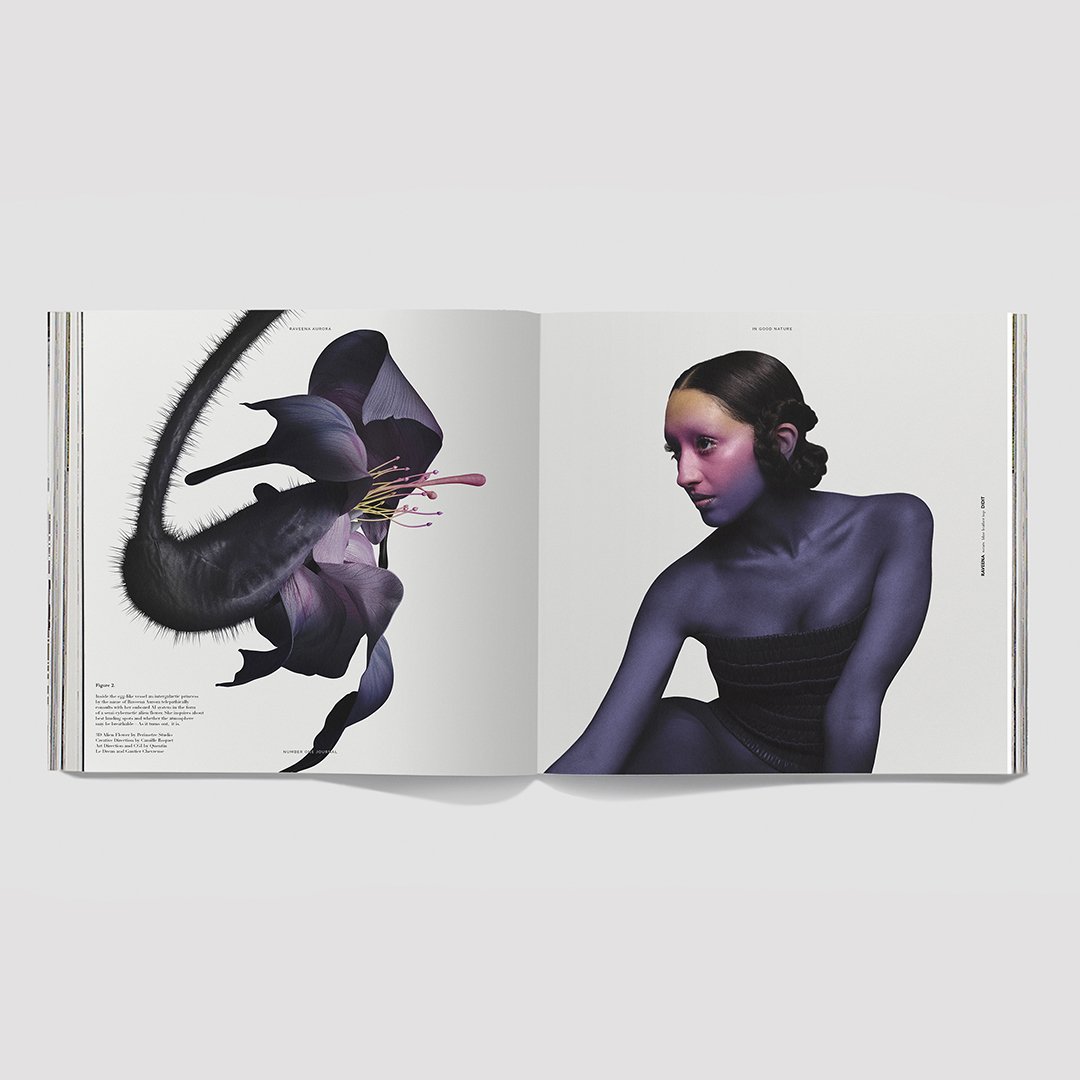
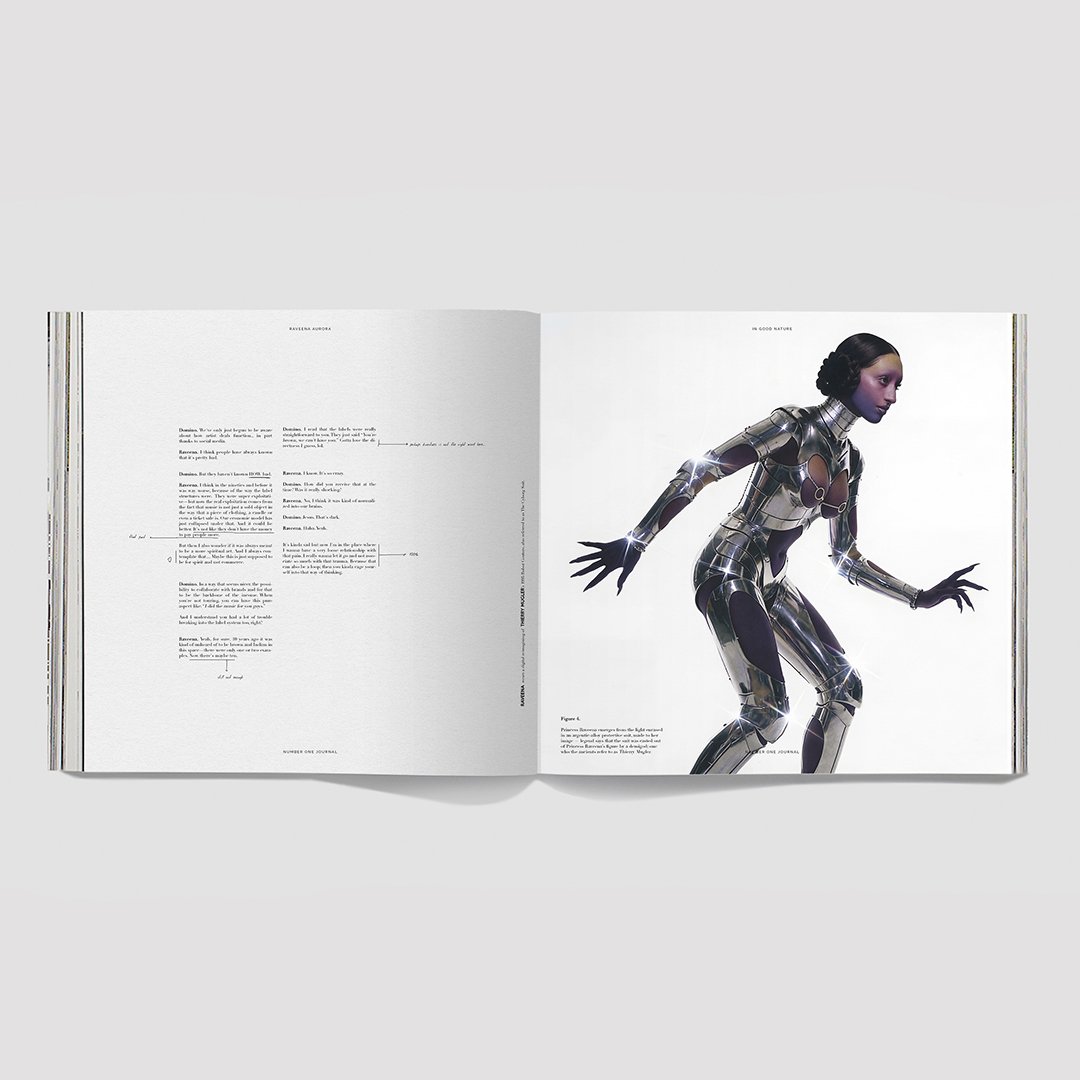
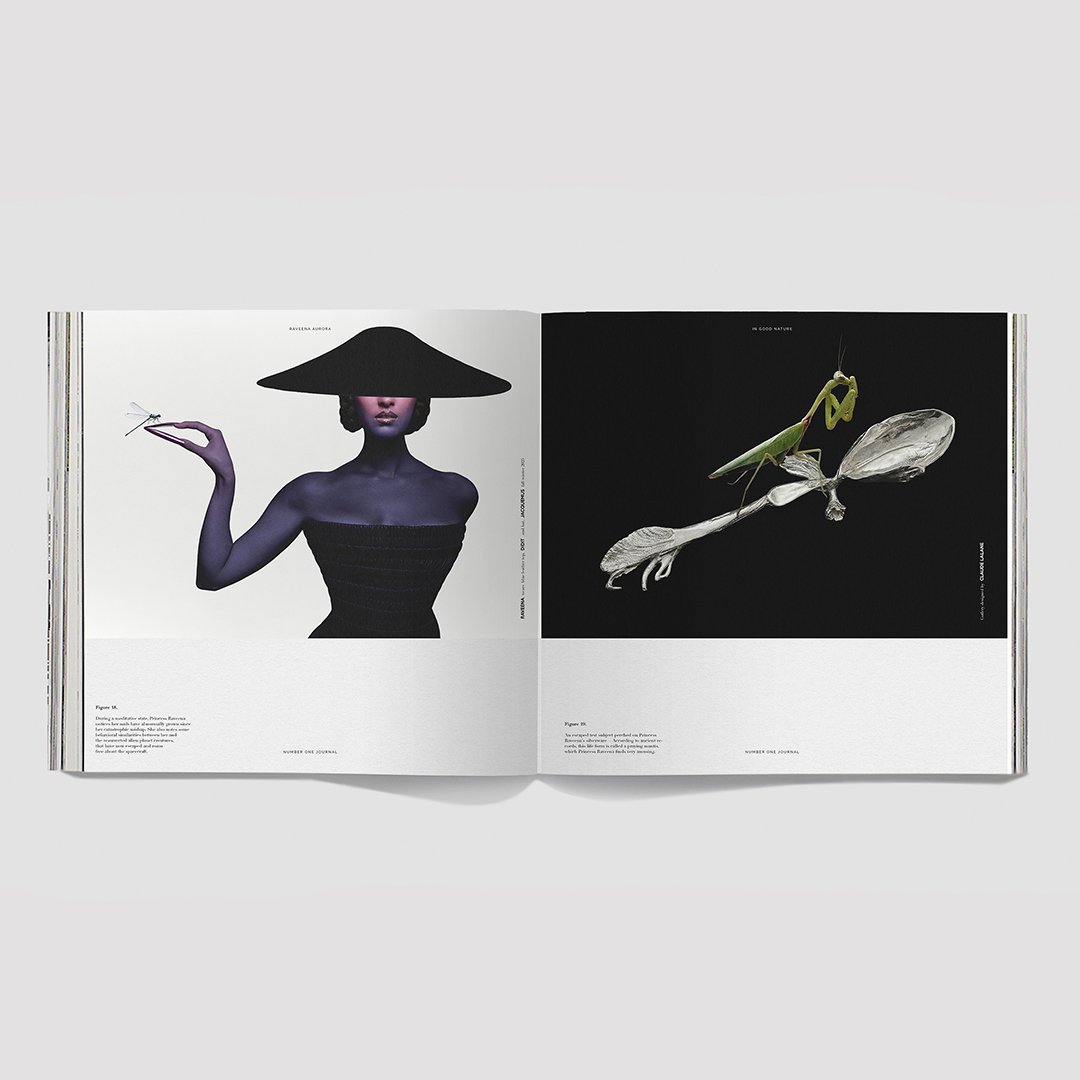
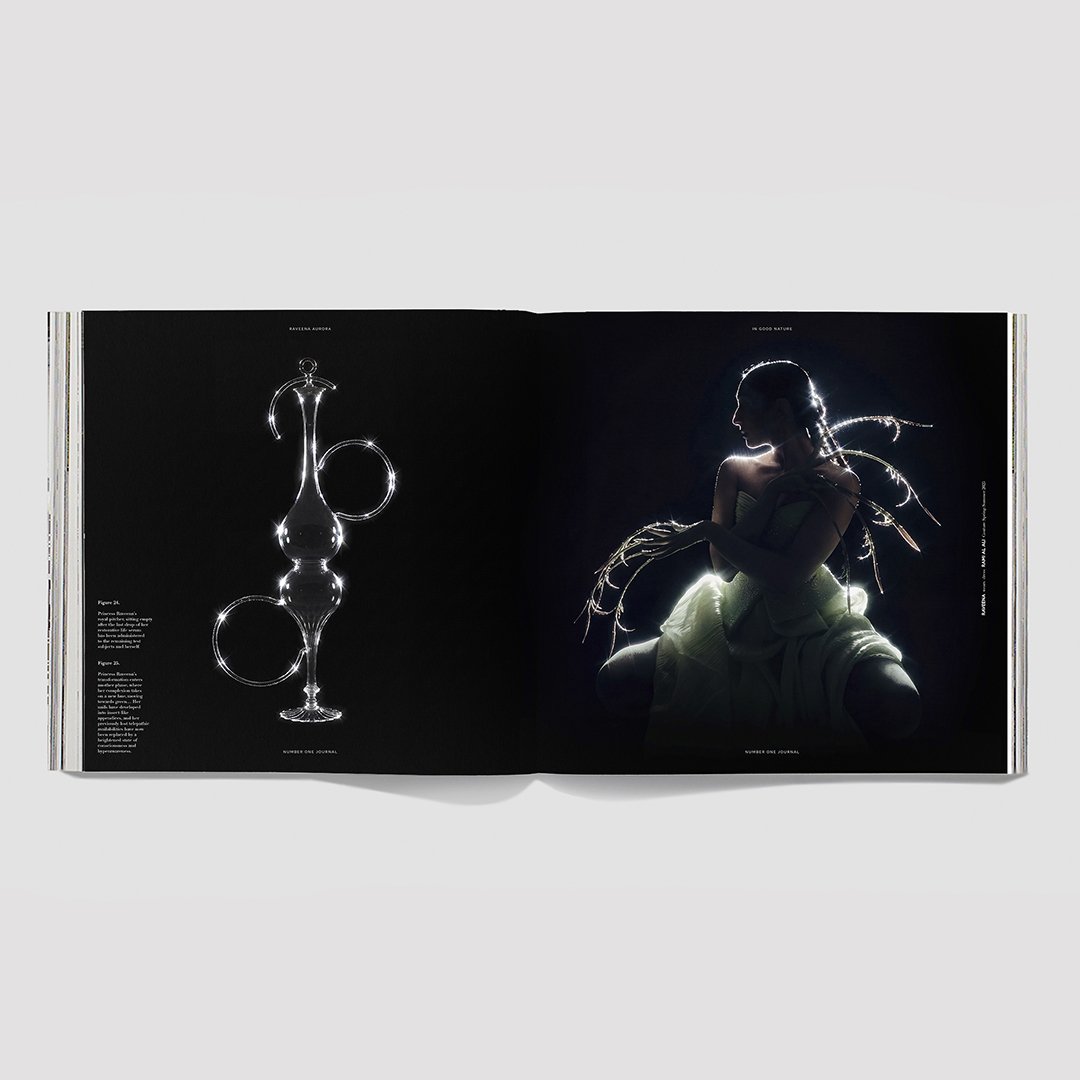
Titled In Good Nature, the cover story unfolds as speculative ecology: Across a series of stark, sculptural images, Raveena is reimagined — her skin painted in otherworldly hues, her gestures evoking something almost ritualistic. She is at once alien and ancestral, a vessel through which nature reclaims authorship.
What begins as a visual transformation extends into a deeper conversation. In our interview, Raveena reflects on cycles of grief and rebirth, the alchemy of sound for her album Where the Butterflies go in the Rain, and the spiritual undercurrents that guide her work. With new music on the horizon and a visual project unfolding across imagined planetary landscapes, she situates herself within a lineage of artists who use softness, sensuality, and introspection as radical tools of transformative creation.
This 44-page issue moves fluidly between image and text, weaving together speculative fiction, alongside ecological symbolism, and intimate dialogue. Suggesting a world in which the boundaries between the natural and the artificial have long dissolved.
What remains is not dystopia, but transformation.
A quiet proposition: that even in mutation, there is beauty — and in surrendering to change, a new kind of harmony.
In this volume of Number One Journal, recording artist Raveena Aurora emerges as something other than human.
Titled In Good Nature, the cover story unfolds as speculative ecology: Across a series of stark, sculptural images, Raveena is reimagined — her skin painted in otherworldly hues, her gestures evoking something almost ritualistic. She is at once alien and ancestral, a vessel through which nature reclaims authorship.
What begins as a visual transformation extends into a deeper conversation. In our interview, Raveena reflects on cycles of grief and rebirth, the alchemy of sound for her album Where the Butterflies go in the Rain, and the spiritual undercurrents that guide her work. With new music on the horizon and a visual project unfolding across imagined planetary landscapes, she situates herself within a lineage of artists who use softness, sensuality, and introspection as radical tools of transformative creation.
This 44-page issue moves fluidly between image and text, weaving together speculative fiction, alongside ecological symbolism, and intimate dialogue. Suggesting a world in which the boundaries between the natural and the artificial have long dissolved.
What remains is not dystopia, but transformation.
A quiet proposition: that even in mutation, there is beauty — and in surrendering to change, a new kind of harmony.